Prologue Case Study

Strife & Serenity — Prologue

Strife & Serenity is my most ambitious project to date. One that doubled as my Final Major Project for my Undergraduate program. I have labeled this as a 'Prologue', as this is a game that I one day wish to bring to the market. It is a contained slice, to roughly set the tone for what the full game would look like.

Genre: Action RPG Engine: Unity Scope: Vertical Slice Prologue Role: Solo Dev — Systems & Narrative
01 • Framing the slice

Overview

As exciting as it can be, Strife & Serenity isn’t built to be constant adrenaline, but instead a playable mystery. You begin in medias res with incomplete context, and your understanding grows through movement and optional discoveries.

Priority
Story-First
Gameplay exists to elevate narrative tone. Like a book you can inhabit.
Priority
Exploration
Optional discoveries (reports/letters) that deepen context without halting pacing.
Priority
Combat Kit
Abilities, mechanics (parry/dodge), and feel stitched into one readable kit.

My role

Everything (excluding music). Narrative design, systems design, combat tuning, level design, Unity implementation, and overall presentation.

What this prologue is trying to prove
  • Readable tension: The player senses that something is wrong before being told.
  • Understanding through discovery: Context comes from space + optional discoveries, not exposition dumps/spoonfeeding.
  • Character through control: Our protagonist, Ka'Sipho's identity shows up in how he moves, thinks and acts.
North Star:
Combat should feel satisfying, like a conversation. Strife & Serenity is a story game, but the most exciting part away from it, must meet the player well and feel satisfying.
Ideation foundation
Earlier in the semester I went through a months-long ideation phase exploring conflict, player motivation, and the tension between what someone was trained to be vs. what their world demands. That thinking shaped every decision in this slice.
Wide shot of the prologue level
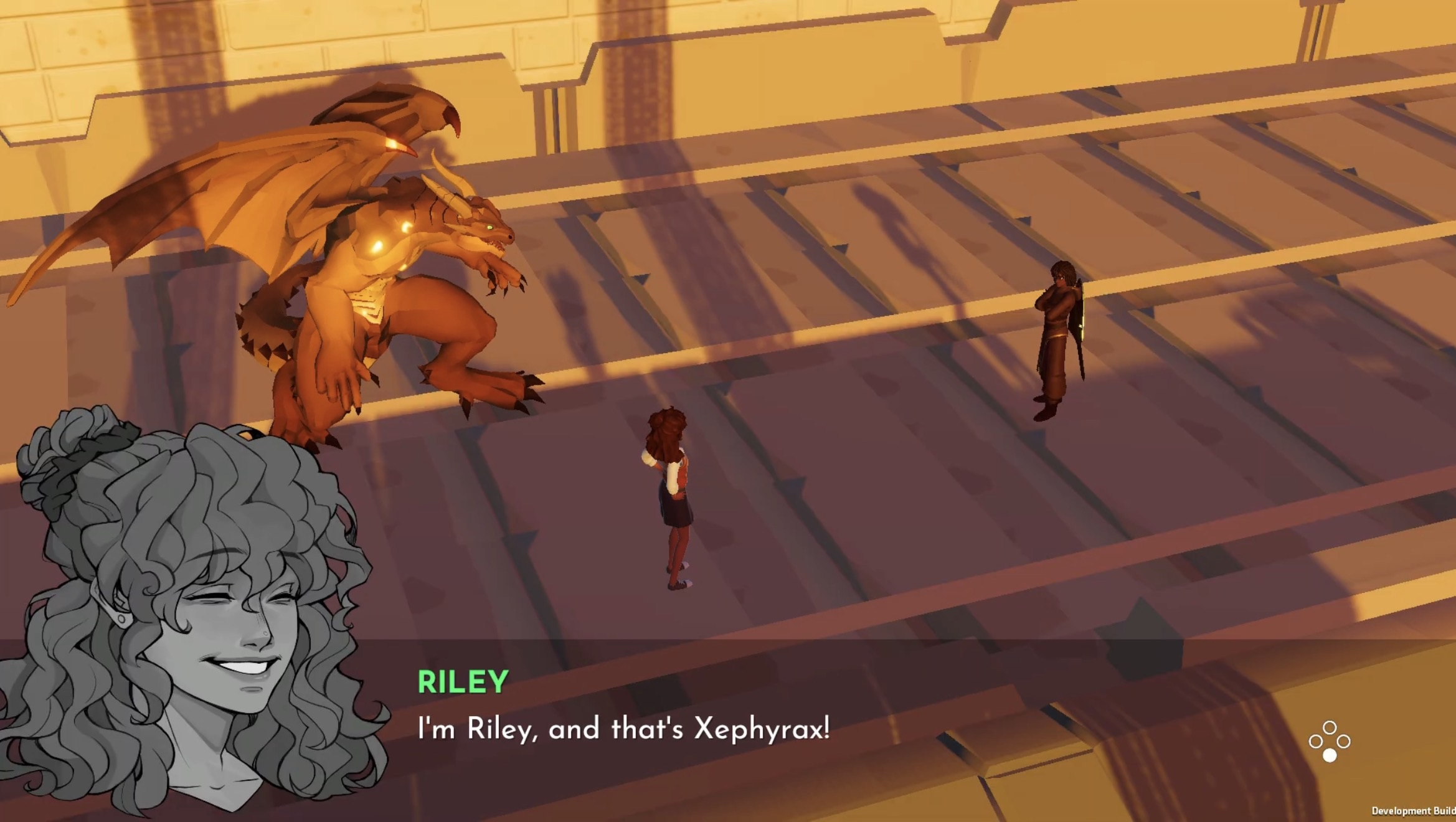
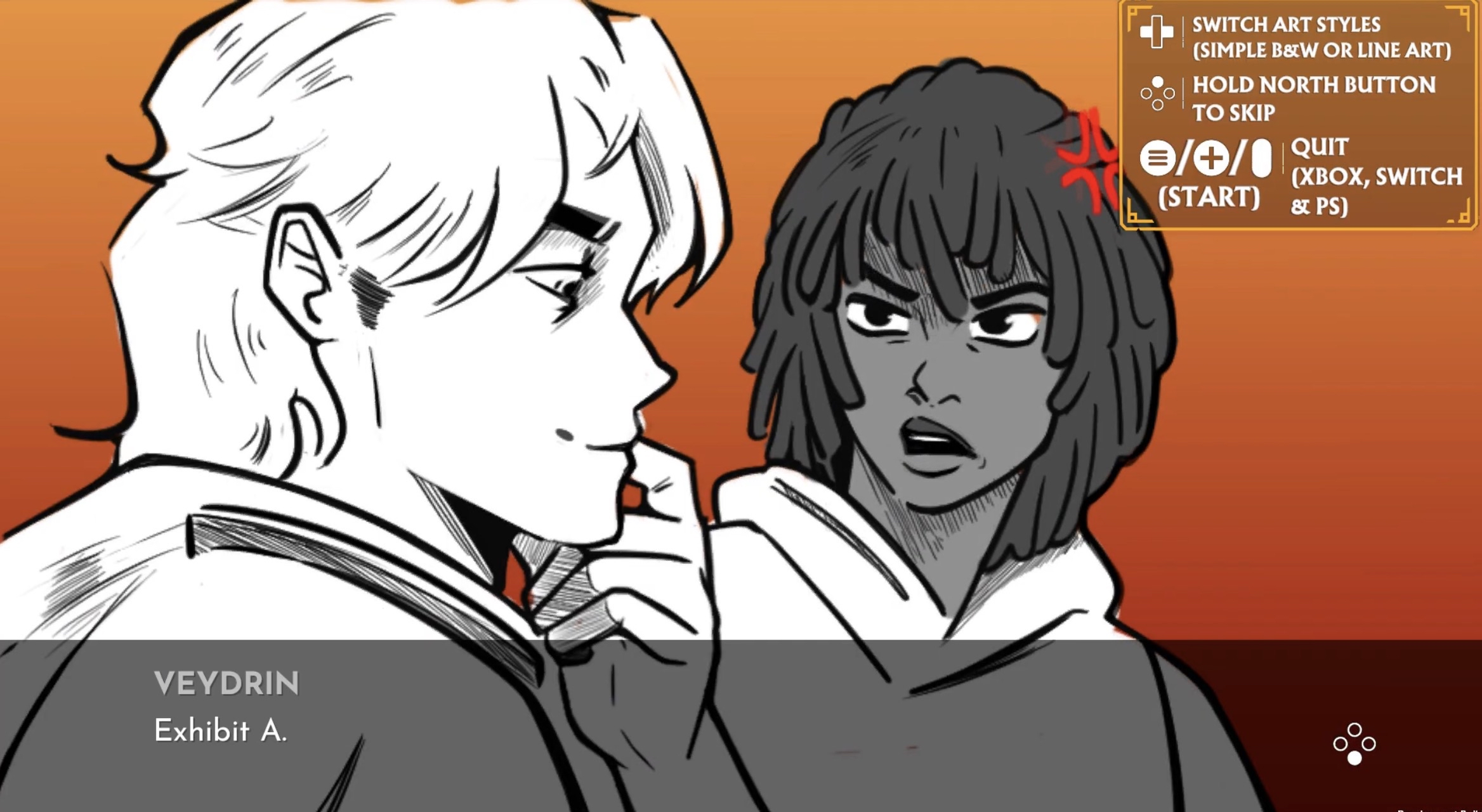
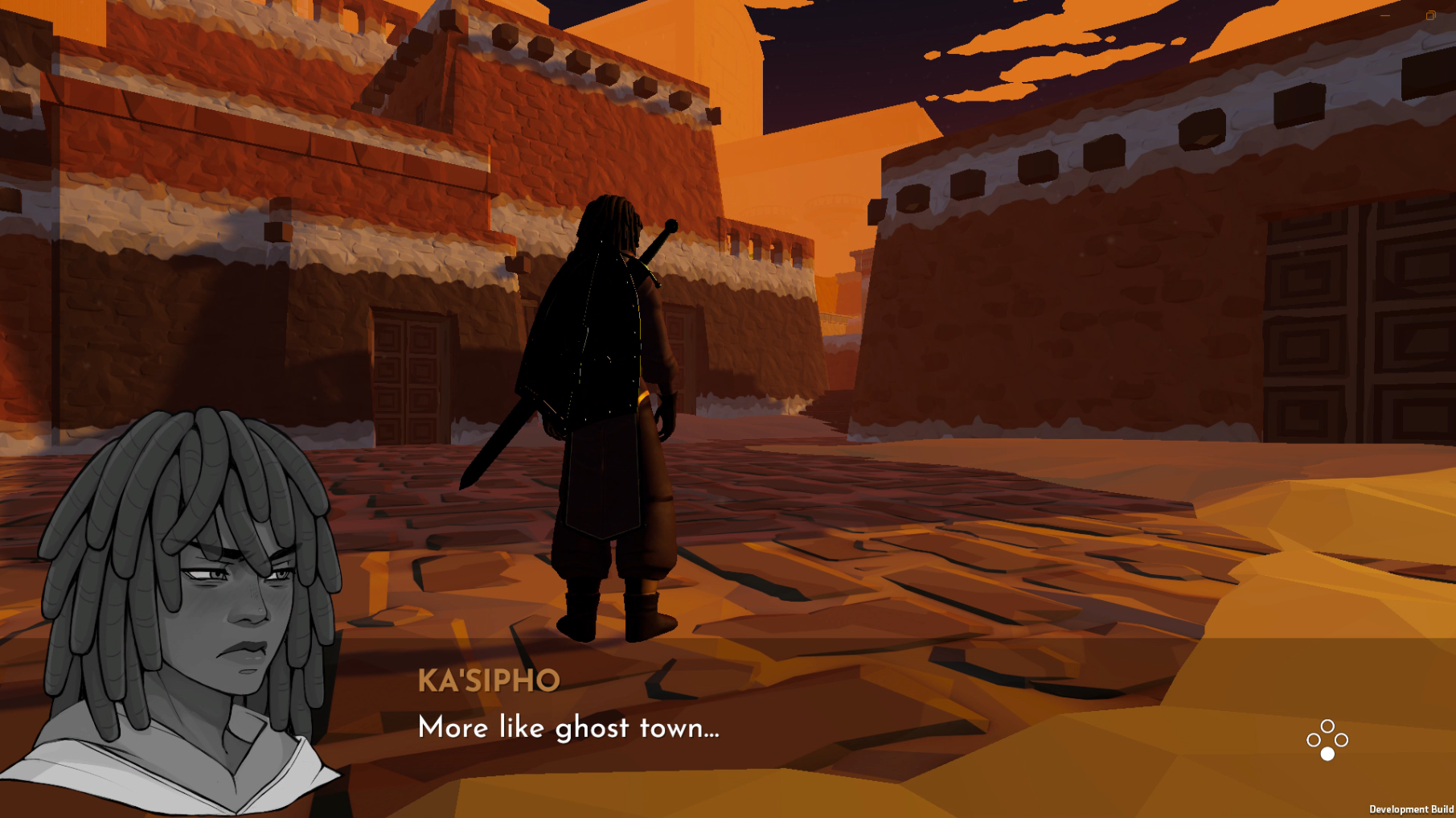
Ka'Sipho (Right) & Veydrin (Left) speaking.
TIP: Click to View
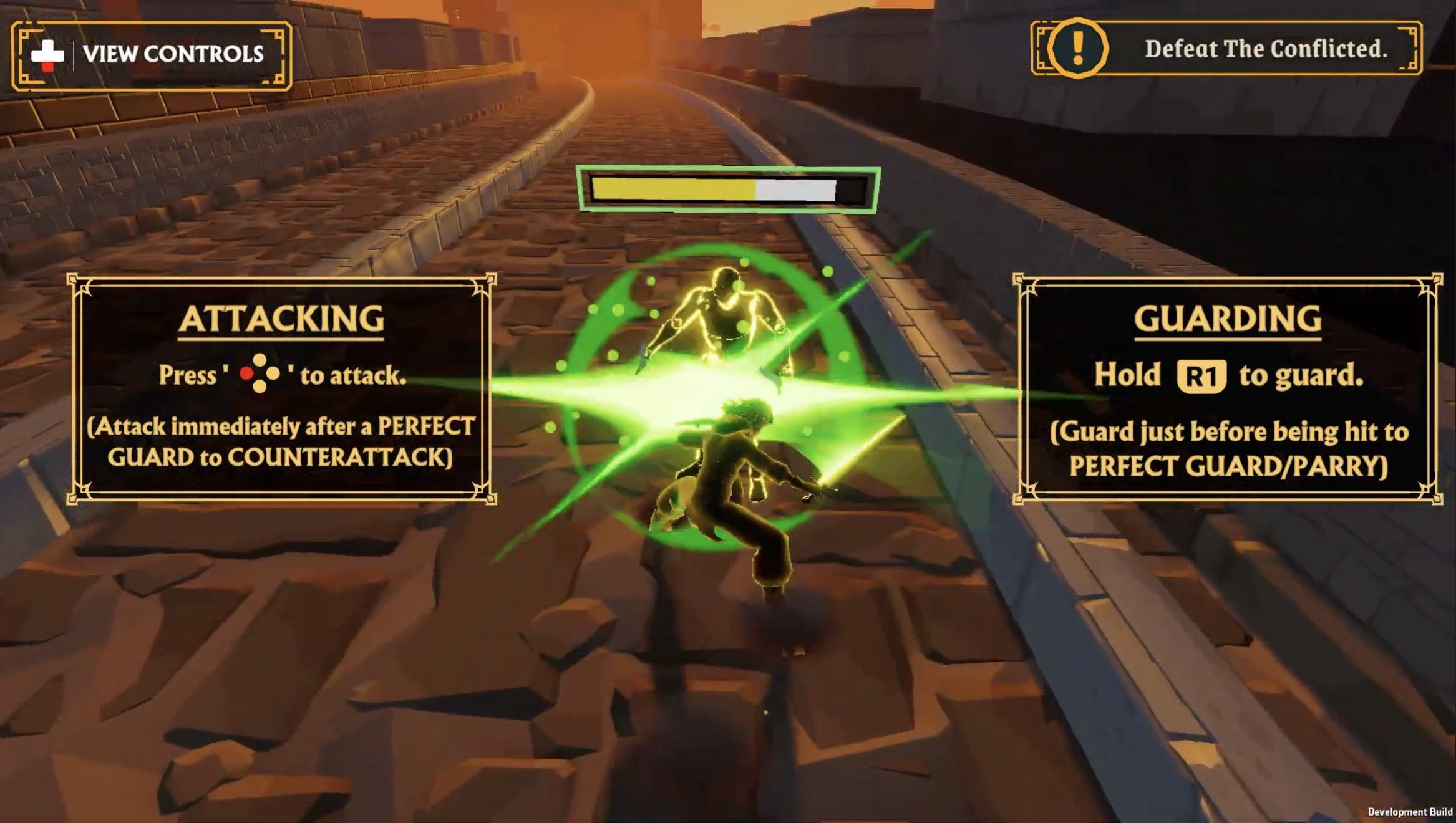
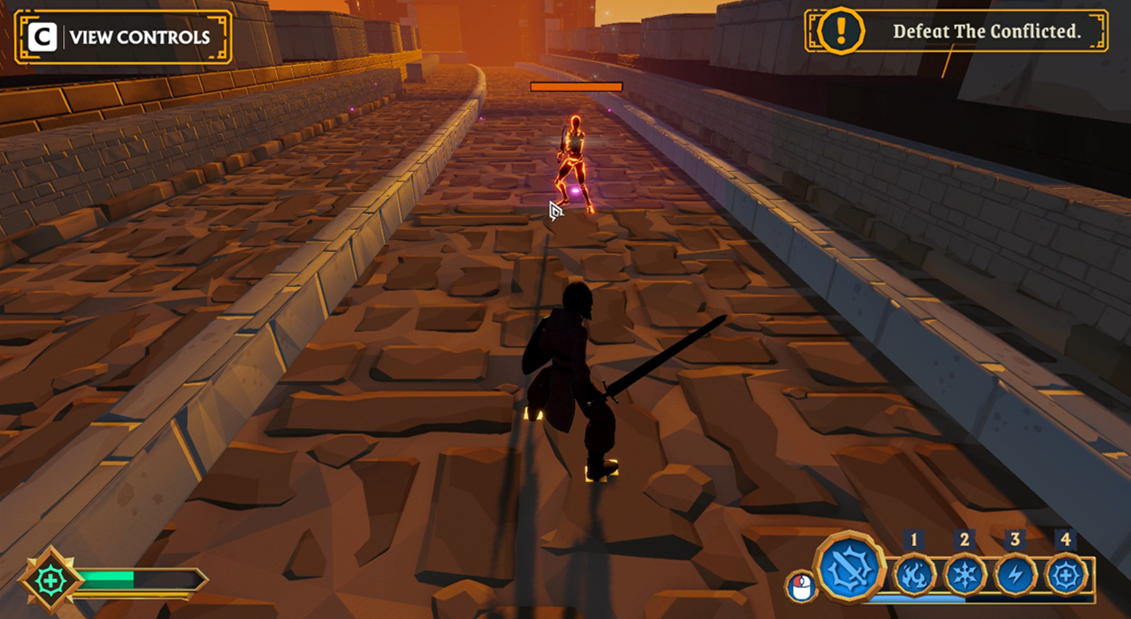
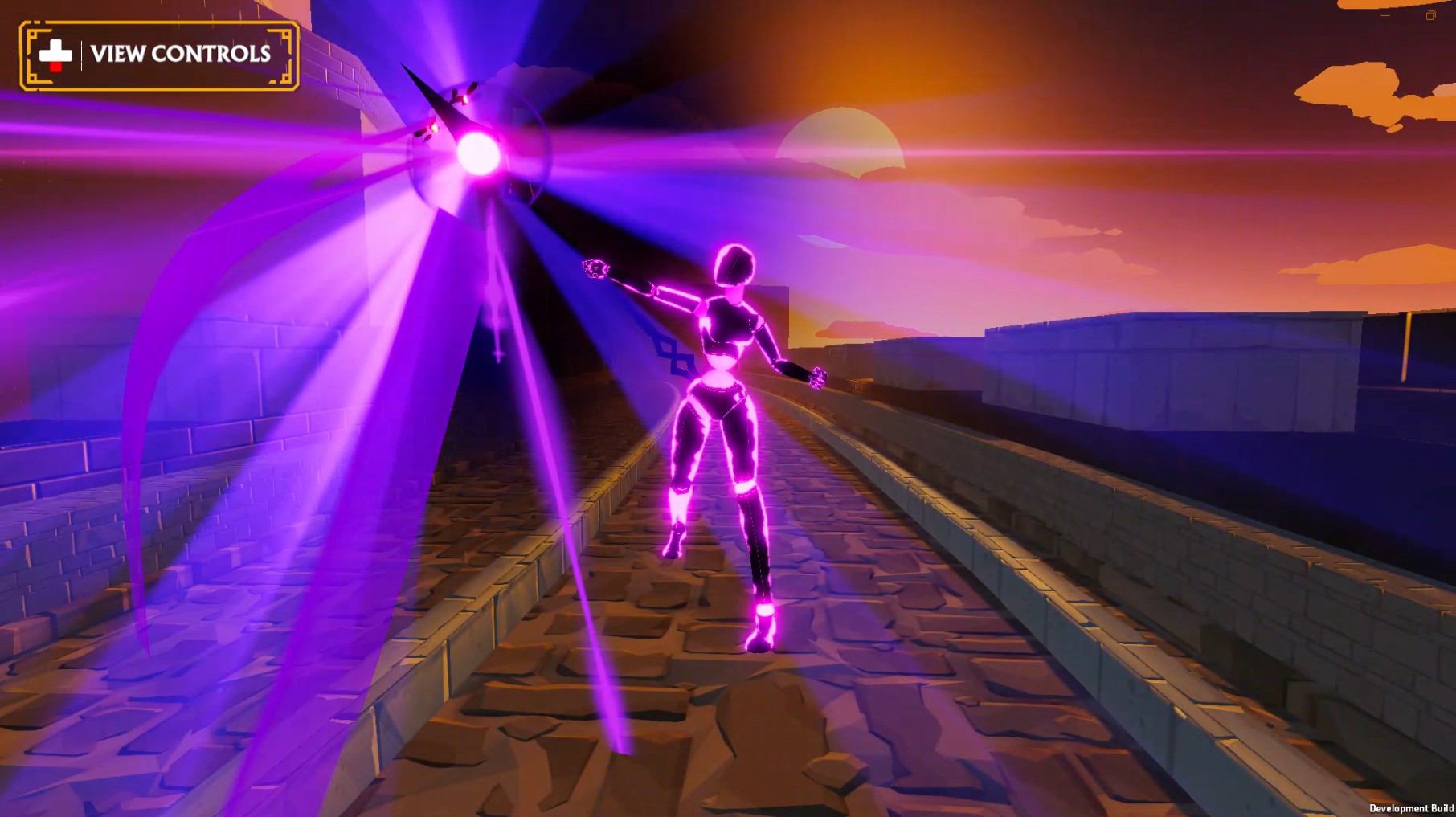
Combat segment clip. Attack, block/parry, dodge, abilities/spells.
TIP: Click to View
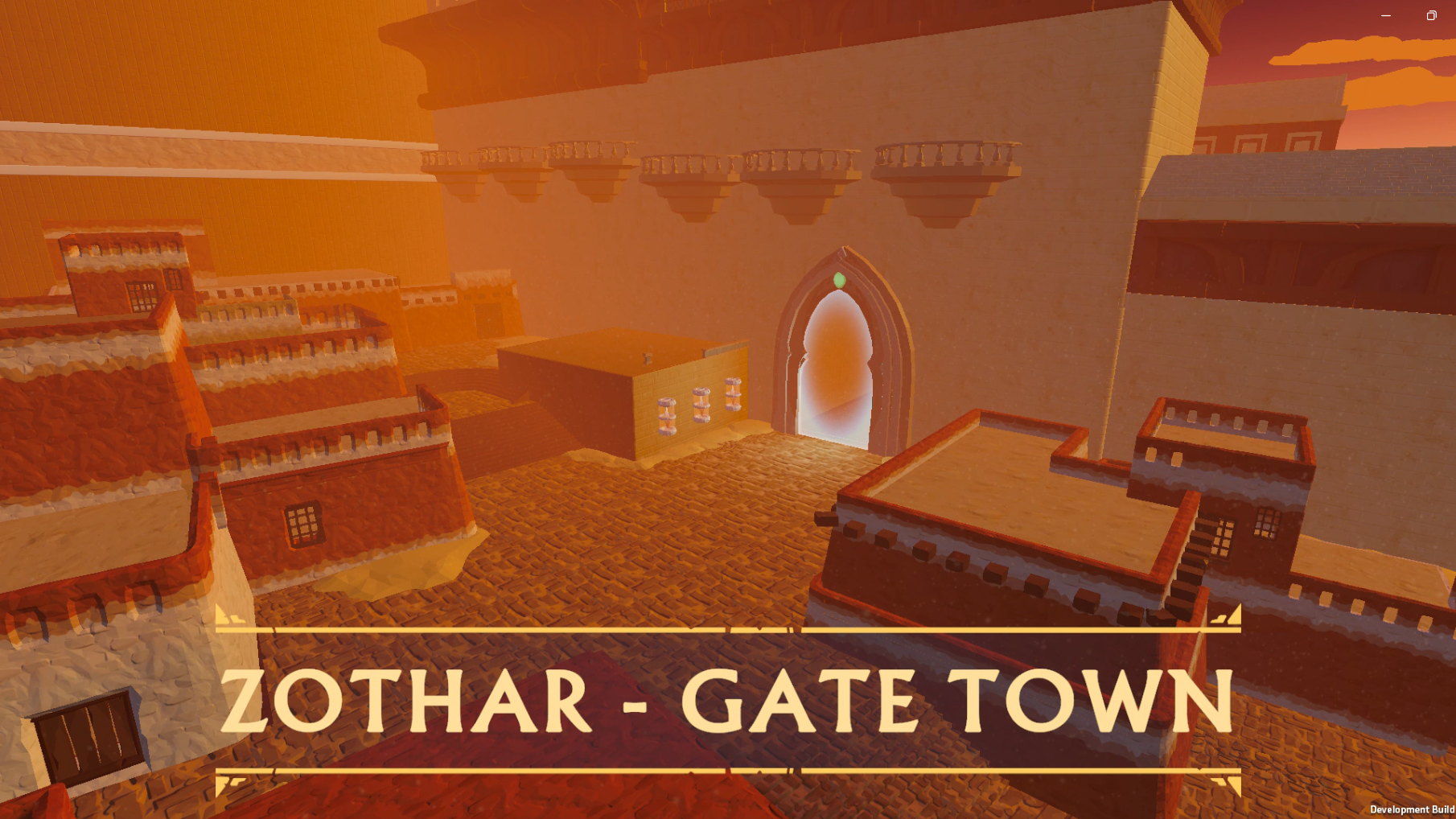
Mood shot of Gate Town environment
Gate Town overhead shot. Abandoned, empty vibe.
TIP: Click to View
02 • How it plays

Core Loop (Prologue)

The loop is designed to be skimmable for first-time players but layered enough to hint at the full game.

01 • Arrival
Disorientation (In Medias Res)

You enter with limited context. Sparse dialogue, incomplete information, and environmental unease mirror Ka’Sipho’s own uncertainty.

02 • Observe
Exploration as understanding

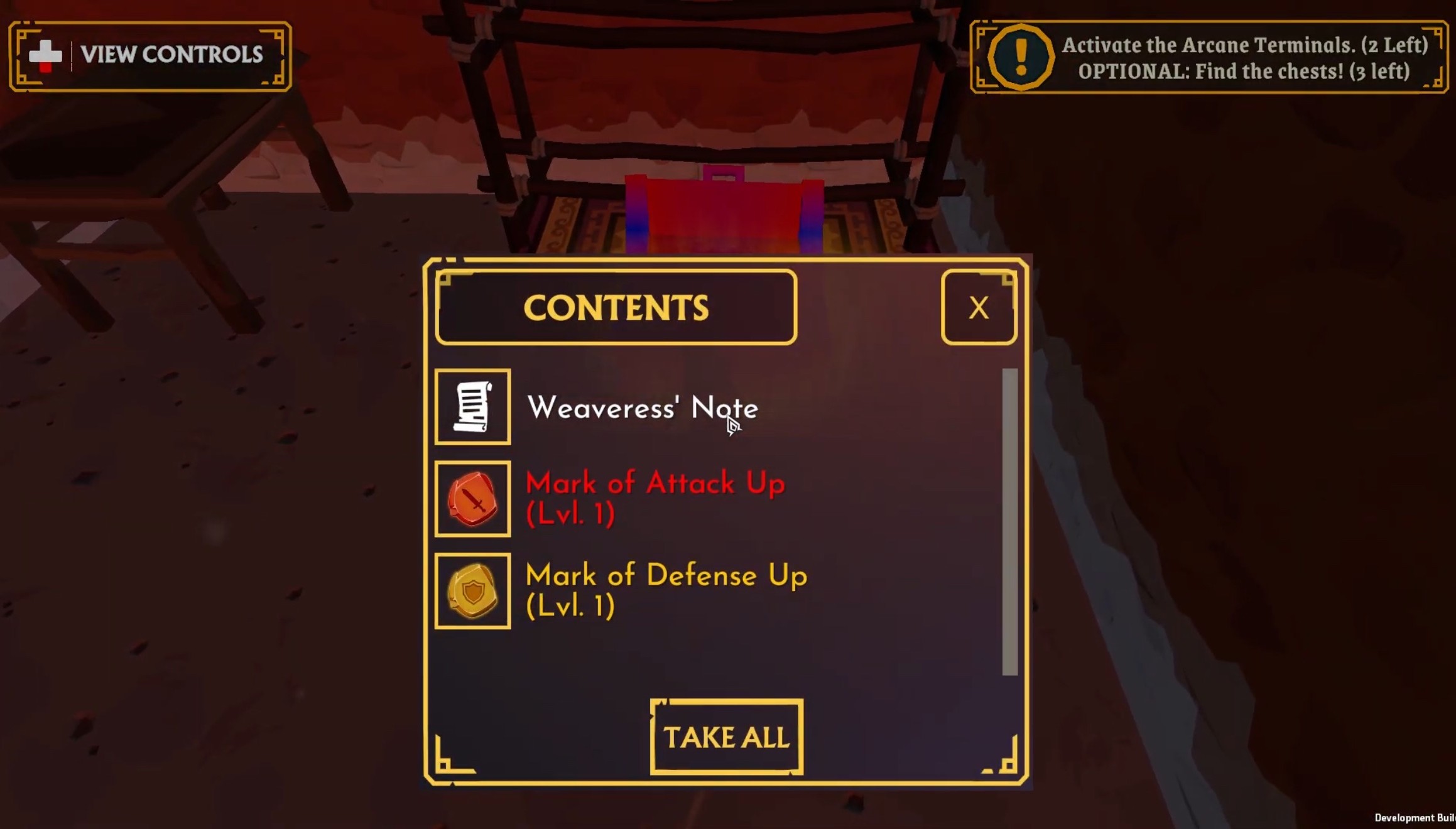
The world teaches without speeches: environmental storytelling + optional discoveries (reports, letters, etc.) deepen meaning.

03 • Engage
Intentional response

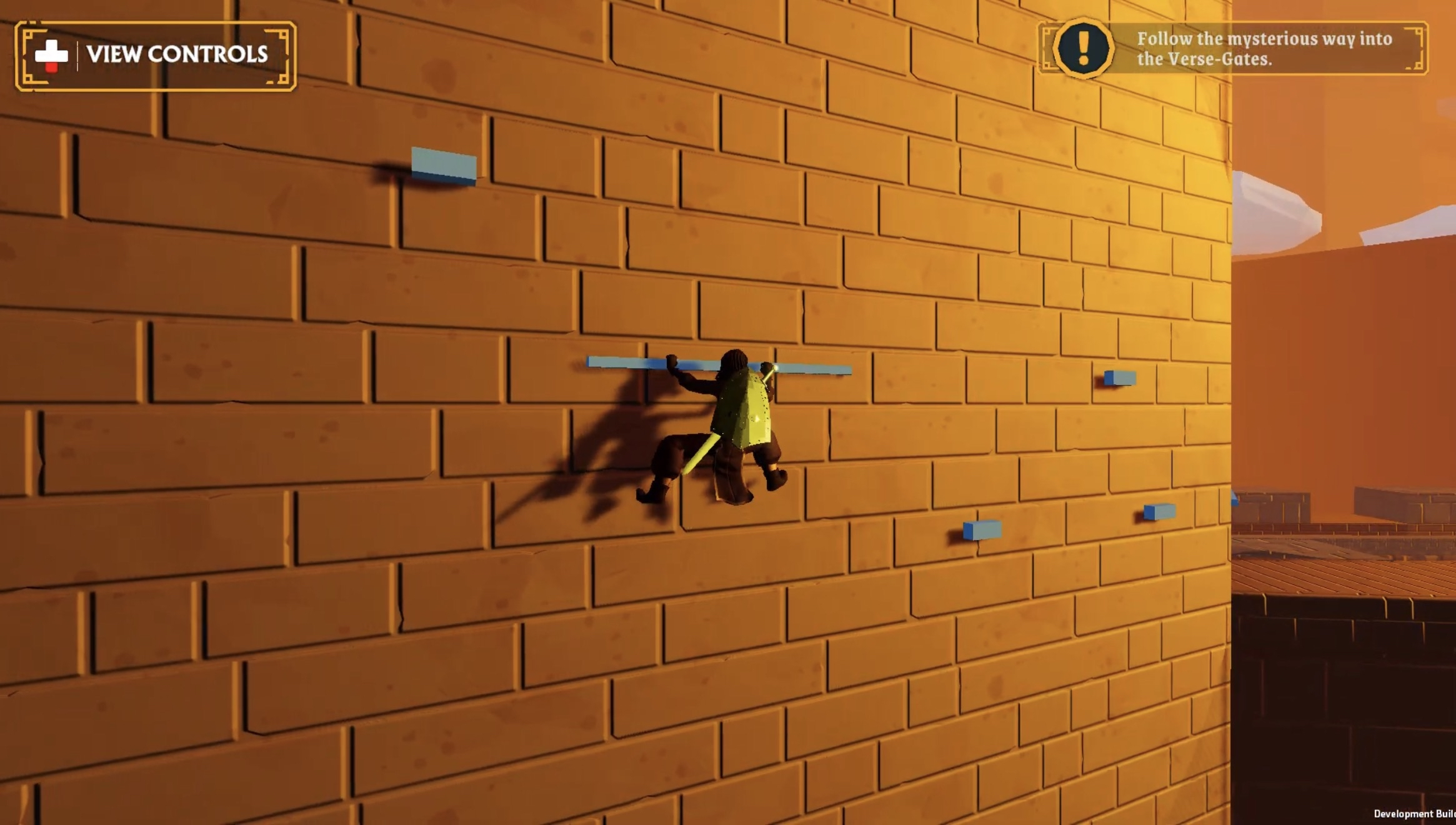
Engagement isn’t only combat: traversal (jump/dodge/sprint/grapple) and restraint are meaningful choices, not downtime.

04 • Reflect
Breath + consequence

Quiet beats let tension land. The game gives room to process, then asks you to move forward anyway.

Deep Dive
What I wanted players to feel
  • Curiosity before confidence: “What happened here?” comes before “I’m in control.”
  • Physicality: Traversal sells caution and capability, not just speed.
  • Earned momentum: Power spikes come from intentional play, not passive stat inflation.
Deep Dive
Worldbuilding via artifacts
Exploration rewards context. Optional discoveries work like “field reports” — inspired by Kingdom Hearts: Birth By Sleep’s report-style lore delivery — letting players opt into deeper understanding.
Loop flow screenshot / layout
First gameplay segment. Comes after intro cutscene + scarce info given to player.
TIP: Click to View
Traversal clip. Enemy tests Ka'Sipho's memory in climbing minigame.
TIP: Click to View
Discovery / report UI moment
Discovery moment. Show a report/letter pickup, or a small environmental “tell.”
Replace with: discovery UI or prop shot
03 • The toolkit

Key Systems

This prologue isn’t only “combat systems”. It’s also progression + customization that reinforces intentional play — especially through Marks and the Adaptive Combat Gauge.

Combat Identity

Strife & Serenity styles

Combat isn’t built around a single solution. You can’t rely only on sword attacks, hiding behind a shield, or mindlessly casting spells. Each tool solves a different problem, and victory comes from weaving them together.
World & Discovery

Optional context (reports, letters)

Exploration isn’t loot-hunting — it’s narrative clarity. Optional artifacts add meaning without forcing exposition, letting players choose how deep they want to go.

Customization

Marks (Enhancement Gems)

Marks attach to weaponry to modify stats/behavior. Early iterations explored a Materia-style “spells depend on slots”, but the prologue uses Marks as reinforcement rather than permission — enhancing what the player chooses to do.

Reward Loop

Adaptive Combat Gauge

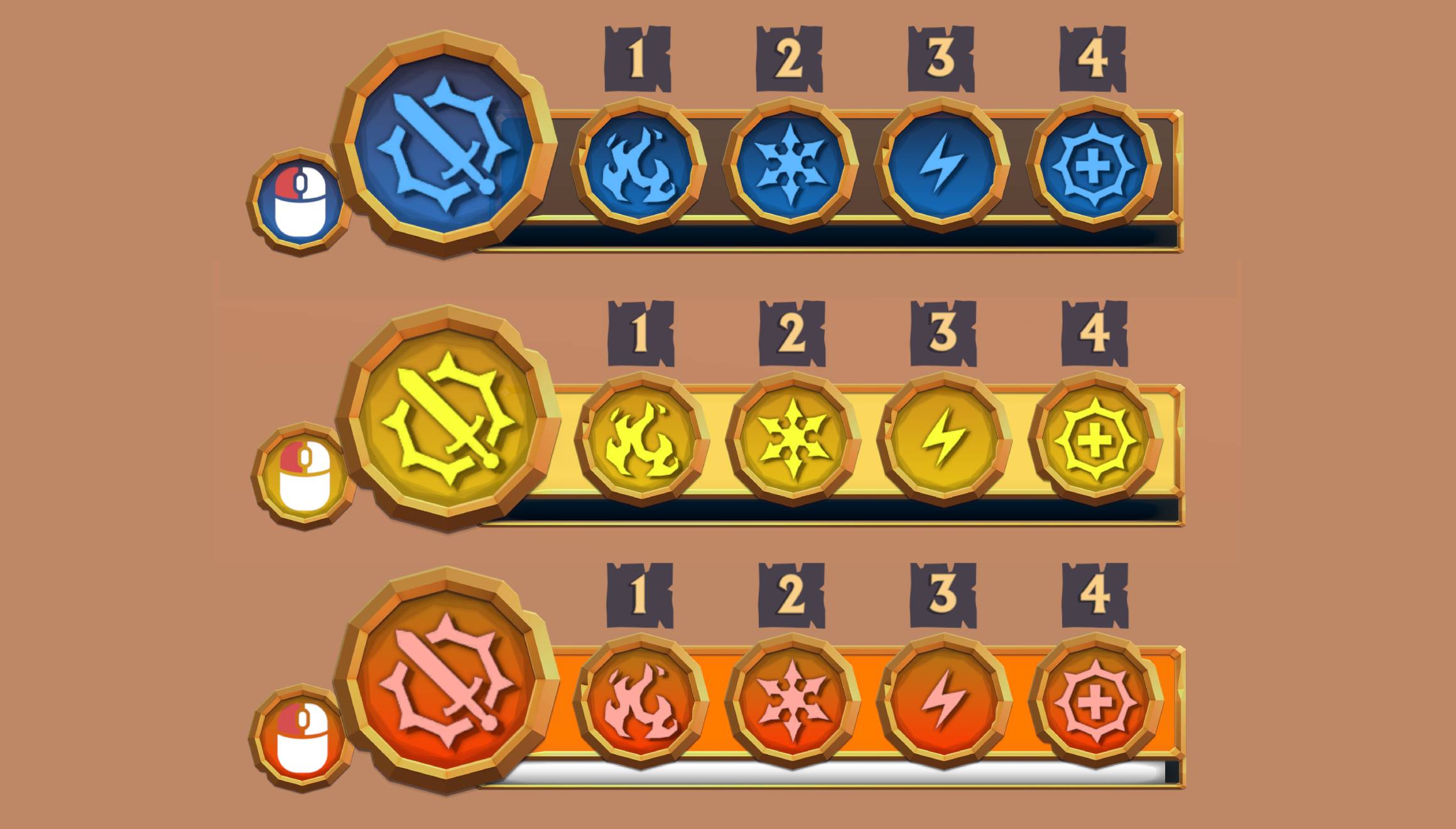
Variety and momentum fill a gauge. When full, Ka’Sipho’s combat level temporarily rises (cap 3), boosting damage/status impact and encouraging experimentation instead of safe repetition.

Deep Dive
Design Choice: Marks

Early on, I debated making Marks work like Materia from FF7: Slot a Mark → gain a spell/ability. I still like the long-term idea of slotting abilities/spells into a field hotbar, but for the prologue, Marks became enhancements that amplify the player’s intent without hiding core abilities behind configuration.

Deep Dive
Design Choice: Combat Gauge

I explored a command-gauge-inspired approach (Kingdom Hearts: Birth by Sleep), where specific spell sequences would shift combat into element-aligned states (e.g., frequent ice attacks → frost state). For scope/readability, this was simplified into a more linear system for the prologue - while preserving the core goal: reward variety and momentum.

Why this matters:
Marks + Gauge make progression feel like feedback, rather than escalation. The game responds to how you play, which creates a quiet designer ↔ player dialogue that rewards intentional engagement.
Assigning Marks. Damage, Defence, etc boosts instantly visible in character stats section (Left)
TIP: Click to view
Gauge UI / combat level
Gauge readability. Shows gauges at Combat Levels 1 (Blue), 2 (Yellow) & 3 (Red).
TIP: Click to view
System payoff clip. Level up from Combat Level 1 to 2.
TIP: Click to view
04 • How I built it

Process

Development followed a structured multi-phase process. It began with questions on various different themes, and then worked outward toward play.

Ideation & thematic foundation

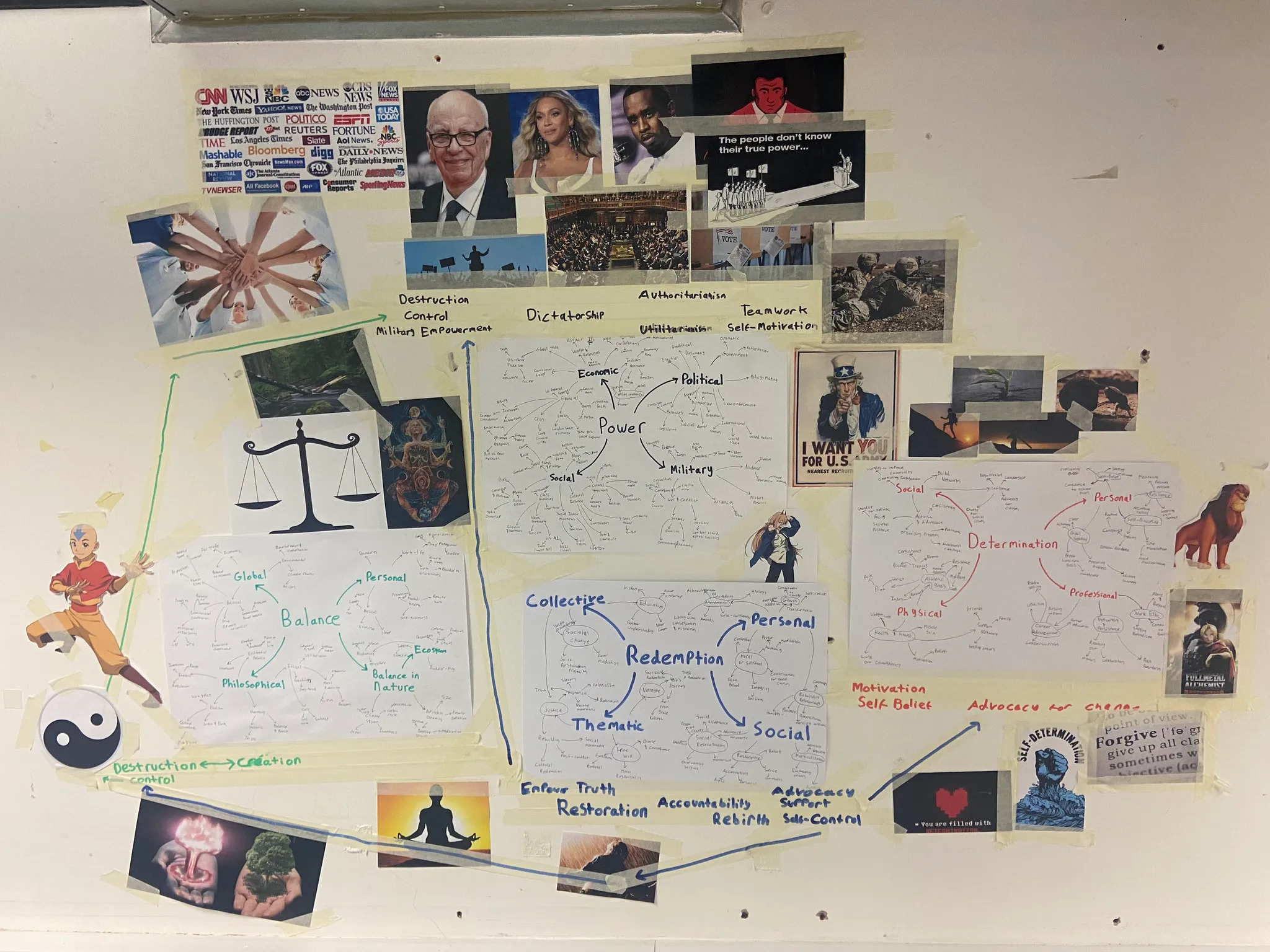
I explored themes such as identity, power, balance, determination, etc, and then deliberately narrowed them down. Conflict became the foundation both narratively and mechanically. This wasn’t just finding a game idea fast, but rather about defining what the game should ask of the player emotionally.

Music Collaboration

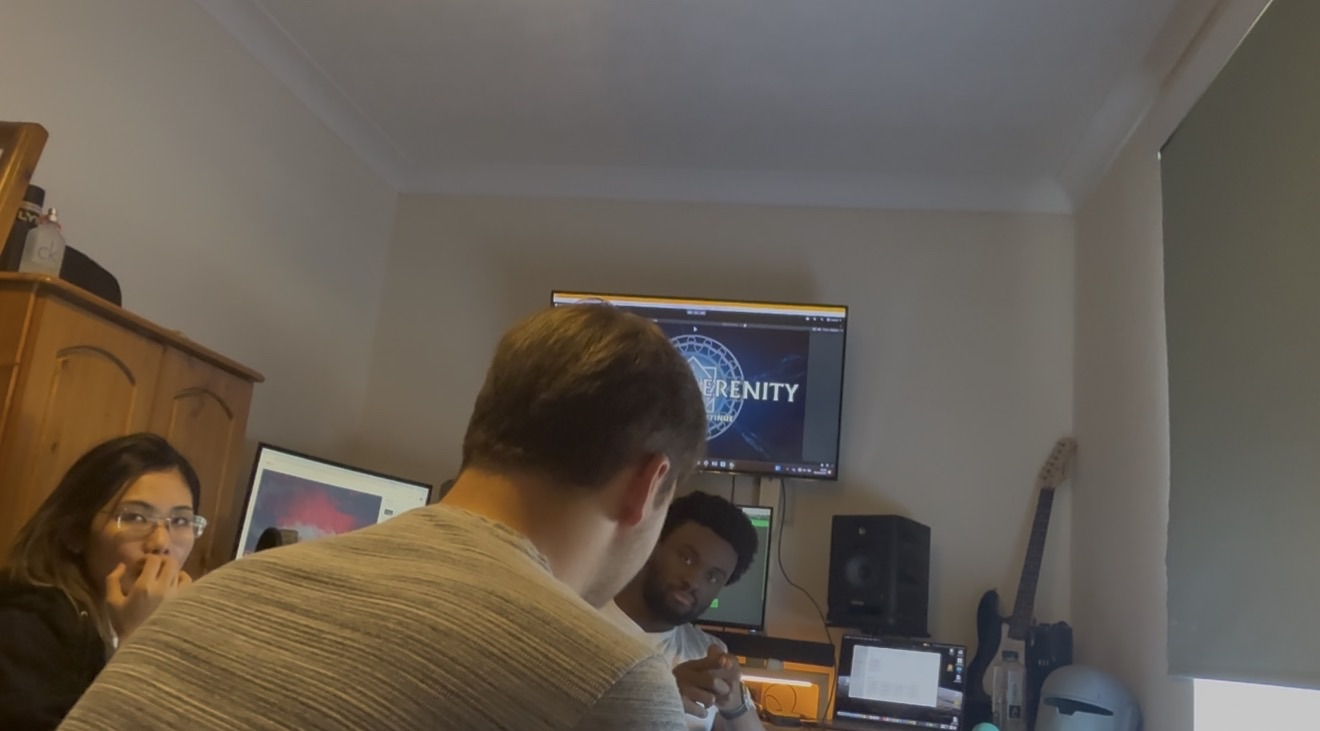
I collaborated with music students and created 14 concept videos for specific moments/moods. They started as music reference, but evolved into proto-storyboards: story ideas surfaced, scenes connected, and the emotional arc locked in before heavy implementation began.

Deep Dive
Mechanical & Visual
With story established, I moved into Unity focusing on basic mechanics, testing how traversal/combat could express character and theme rather than just function. Clarity and spell identity were iterated early in motion before committing to polish.
Deep Dive
Worldbuilding, Art & Iteration
Environments were designed to feel abandoned but still alive, spaces that suggest history rather than explain it. I collaborated with art students on key art/cutscene elements, and followed a tight loop: test → adjust one thing → test again to keep scope controlled.
  • Ideation & thematic foundation
    Conflict, balance, identity, and consequence defined the emotional “why” before mechanics.
  • Story shaping via music collaboration
    14 concept videos evolved into proto-storyboards that clarified the prologue’s emotional arc.
  • Mechanical prototyping
    Early mechanics, then readability, then system payoff. Feel guided the build.
  • Worldbuilding + iteration
    Aged environments, optional discoveries, and disciplined iteration kept the slice focused.
  • Outcome
    A tonal introduction. Story, sound, mechanics, and visuals developed in conversation, not isolation.
Early blockout of level geometry
Ideation. Deepdown of four themes: Power, Balance, Redemption & Determination.
TIP: Click to View
Storyboard. A concept video showing how a scene should play out.
TIP: Click to View
Concept video / storyboard frame / doc screenshot
Collaboration. Working with music students while showing them short early version of game.
TIP: Click to View
06 • Looking forward

Results & Takeaways

What landed well

  • Playtesters appreciated not being spoonfed information and felt more inclined to explore and read up on diary entries for context to better understand.
  • Telegraph passes and counter feedback made successful reads feel deliberate rather than lucky, especially in the duel.
  • Traversal and quiet beats between fights gave players space to breathe and made the emotional spikes in the prologue hit harder.

What I’d push further next

  • Add some combat sections earlier in the game to keep the player on their toes just a little bit more.
  • Give the player more time to familiarise themselves with combat before the boss fight.
  • Tighten onboarding around advanced tech (Perfect parries, gauge upgrades, etc.) to make those tools feel discoverable rather than hidden techs.

Overall, this prologue proved that the Strife & Serenity kit works as a vehicle for story, and that the core pillars hold up under real players. The next phase is scaling those ideas across a fuller chapter without losing that readability.