Case Study

Cthulhu’s Cat Sitter

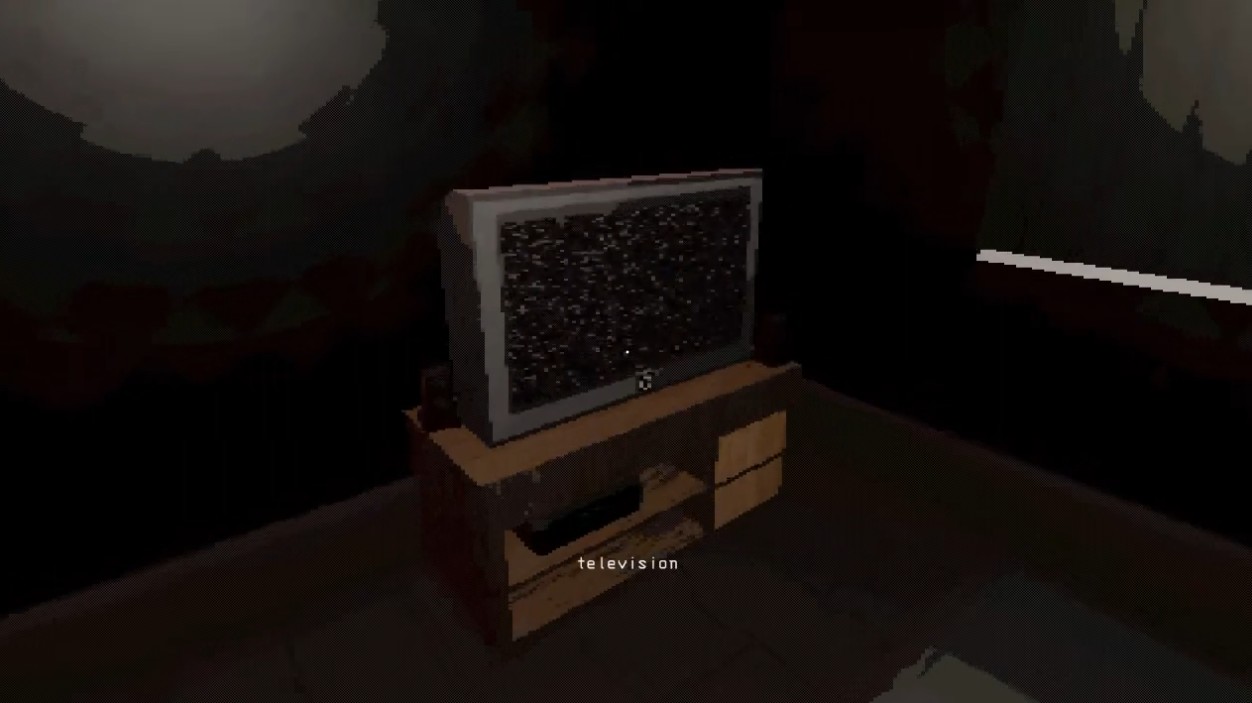
A non-Euclidean 3D horror puzzle game made with friends. You take a suspiciously high-paying cat-sitting job, survive five nights of seemingly impossible trials, and return each time to a house that keeps changing. Your only constant rule: Refill the cat bowl… or you won’t wake up.

Genre: Horror Puzzle Platforms: PC + VR (Originally) Structure: 5 Nights / Trials Hook: Non-Euclidean spaces Style: PS1-inspired + analogue audio
01 • What it is

Overview

Cthulhu’s Cat Sitter aims to bring a fresh angle to indie horror by making the environment itself feel foreign. Spaces that break logic, but still have rules you can learn.

Setup
A job you can’t refuse
You’re broke, you need money, and the salary is absurdly high… even if the employer name is “Cthulhu.”
Structure
5 nights, 5 trials
Choosing to sleep triggers a trial. Survive → return home → repeat. Each night is harder than the last.
Rule
Feed the cat
After every night, you must refill the bowl or the cat eats you in your sleep.

Game purpose

Challenge players to understand foreign spaces through adaptation and observation, making the problem-solving aspect all the more immersive.


Target vibe

Suburban normality with cosmic dread underneath: The house is a mask, and the trials are the truth.
North Star:
The player should feel like the house is alive — watching them, learning them, and quietly changing the rules to win.
“I don’t trust any room in this house… but I think I can outsmart it.” — Desired player feeling
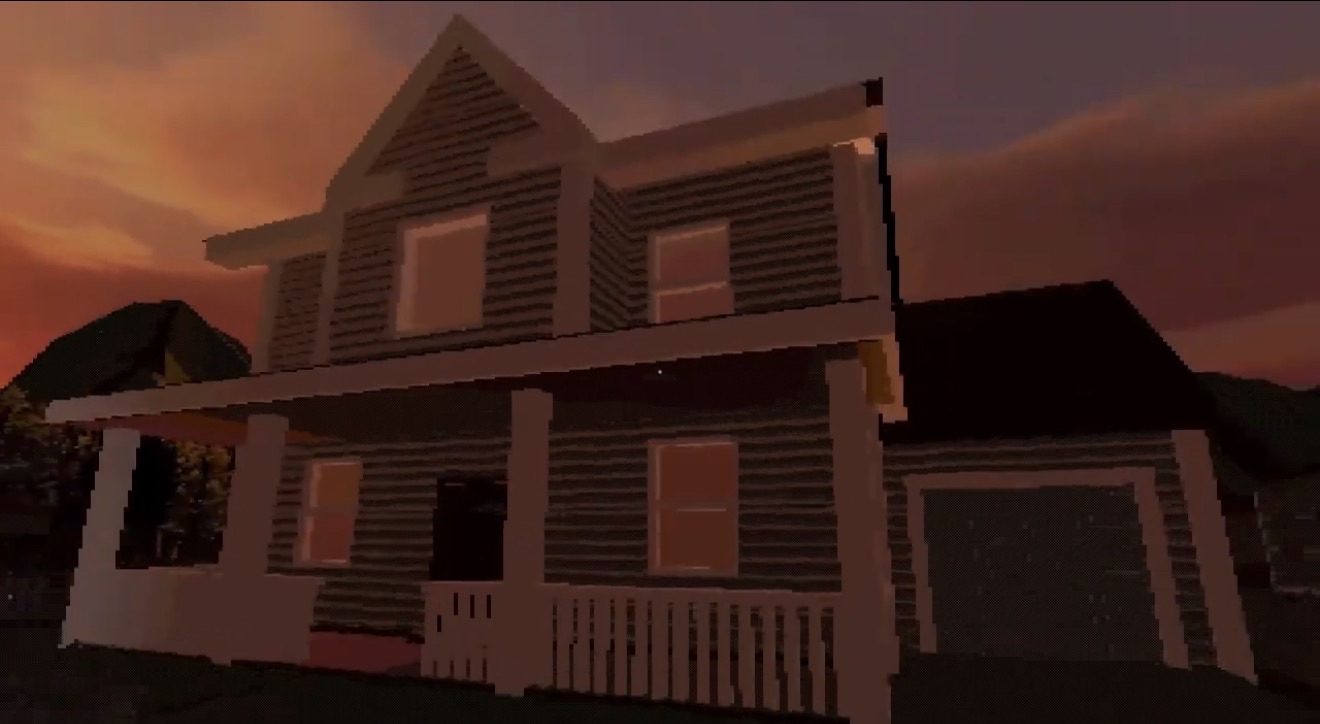
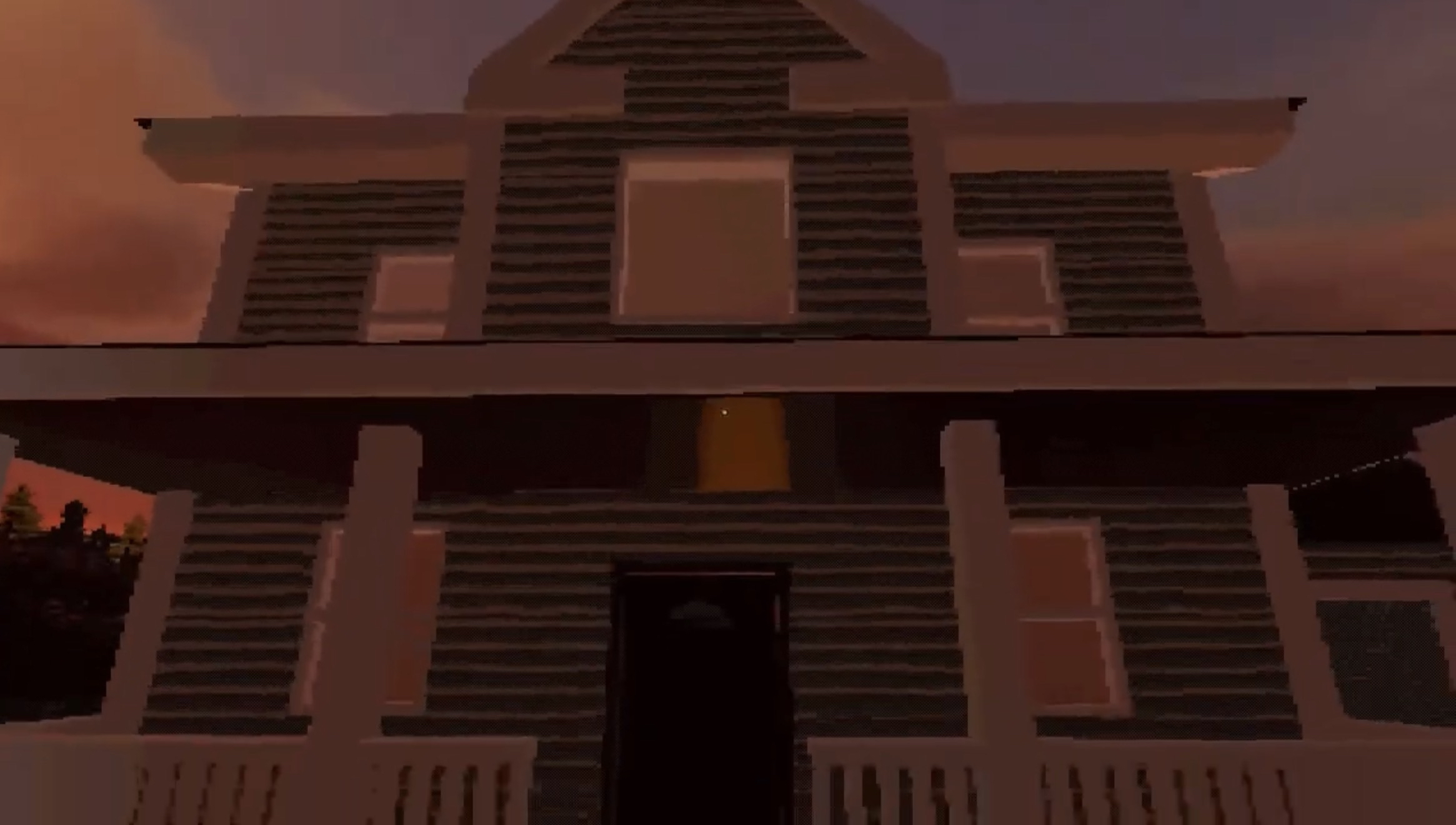
House entry shot
Suburban house shot.
TIP: Click to view
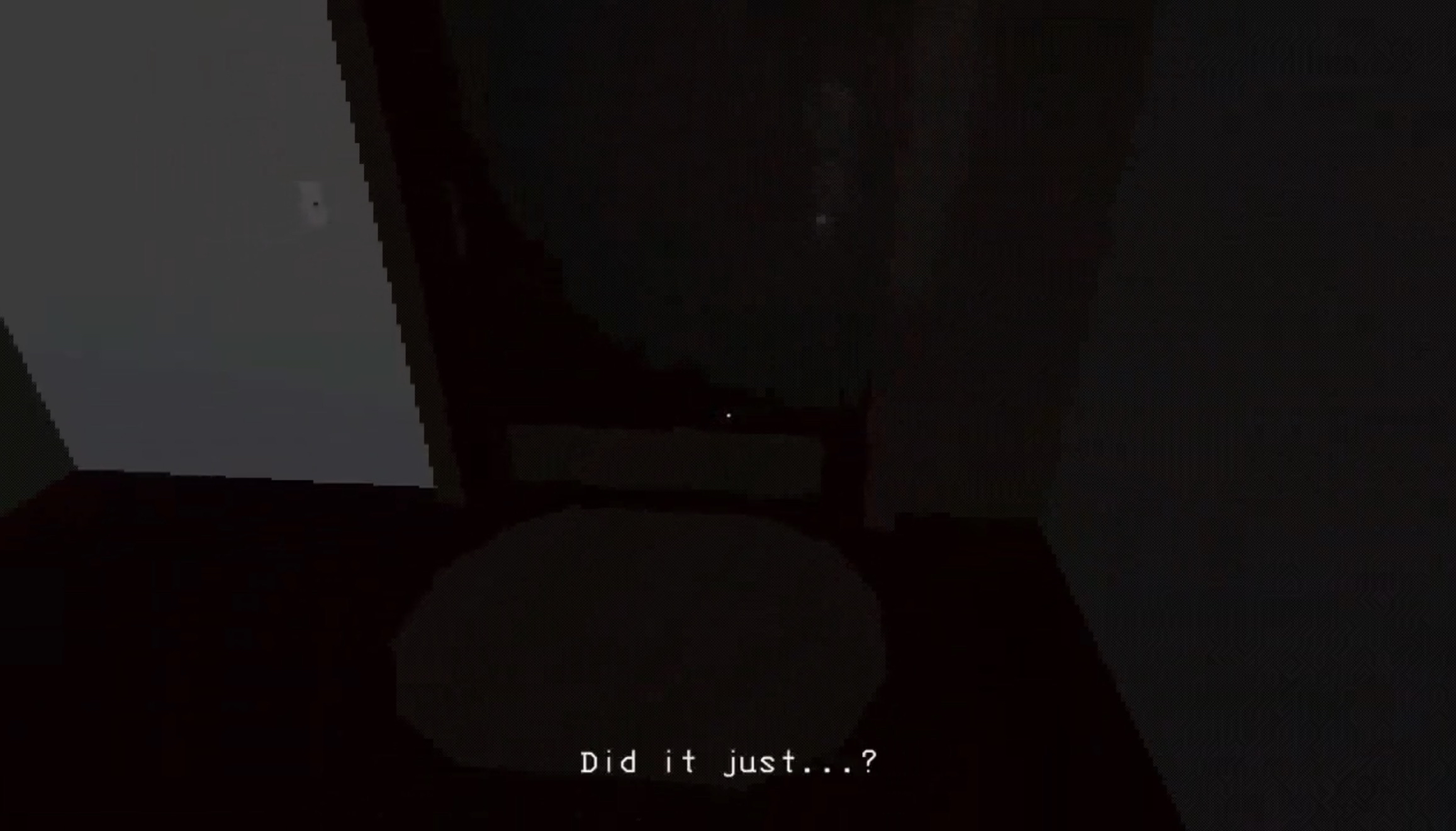
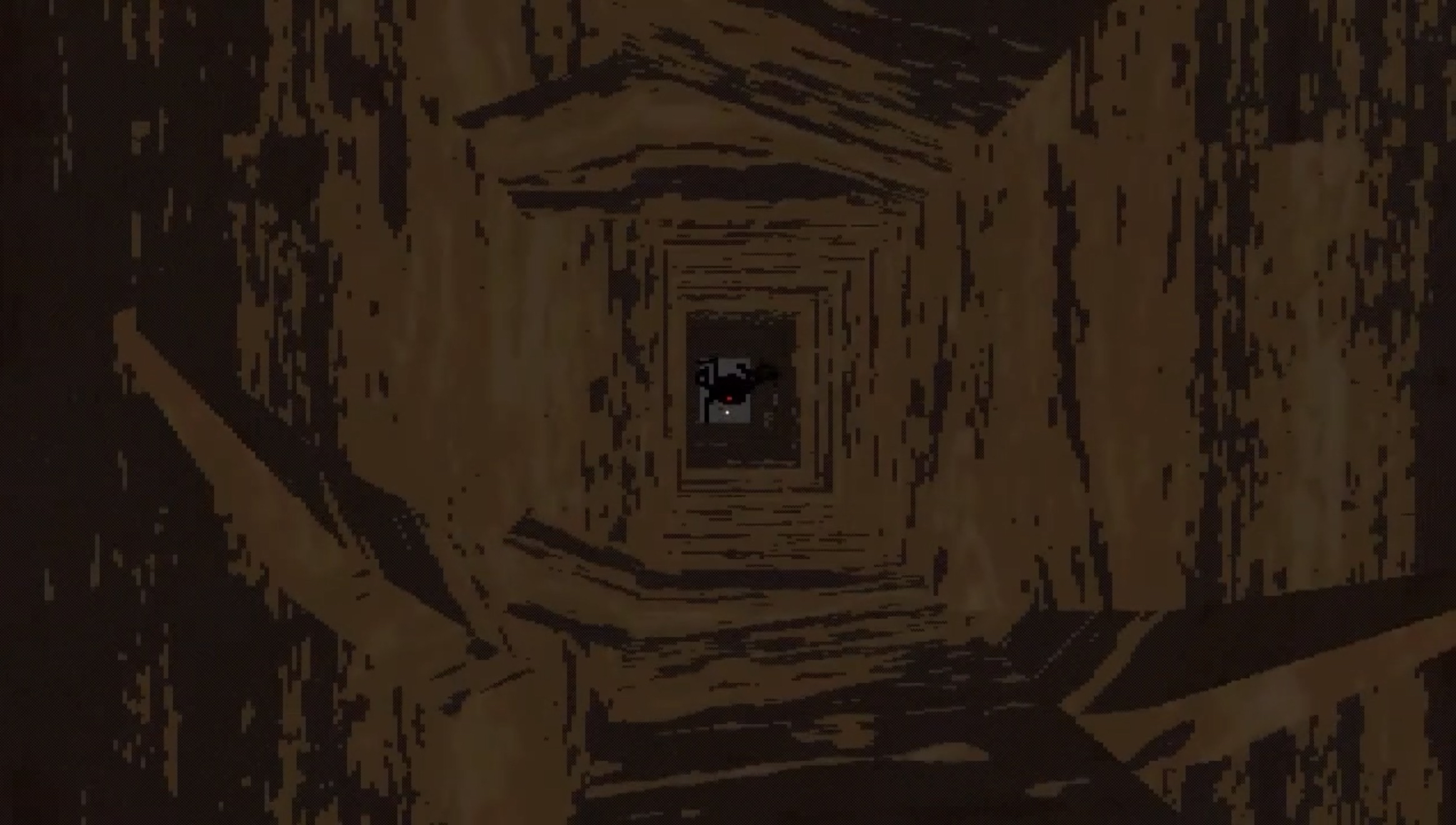
Non-euclidean moment
One image that screams “space is wrong”.
TIP: Click to view
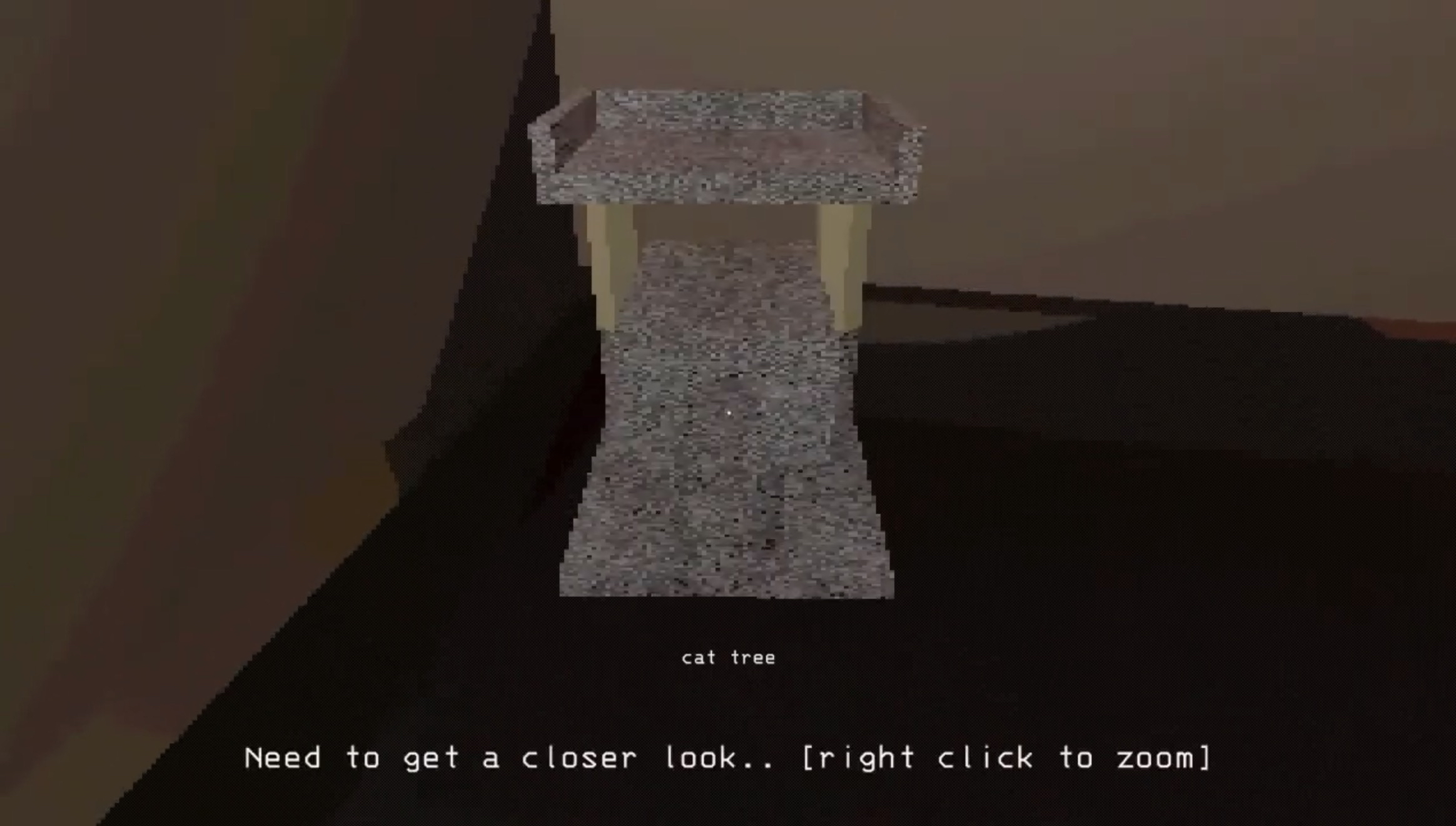
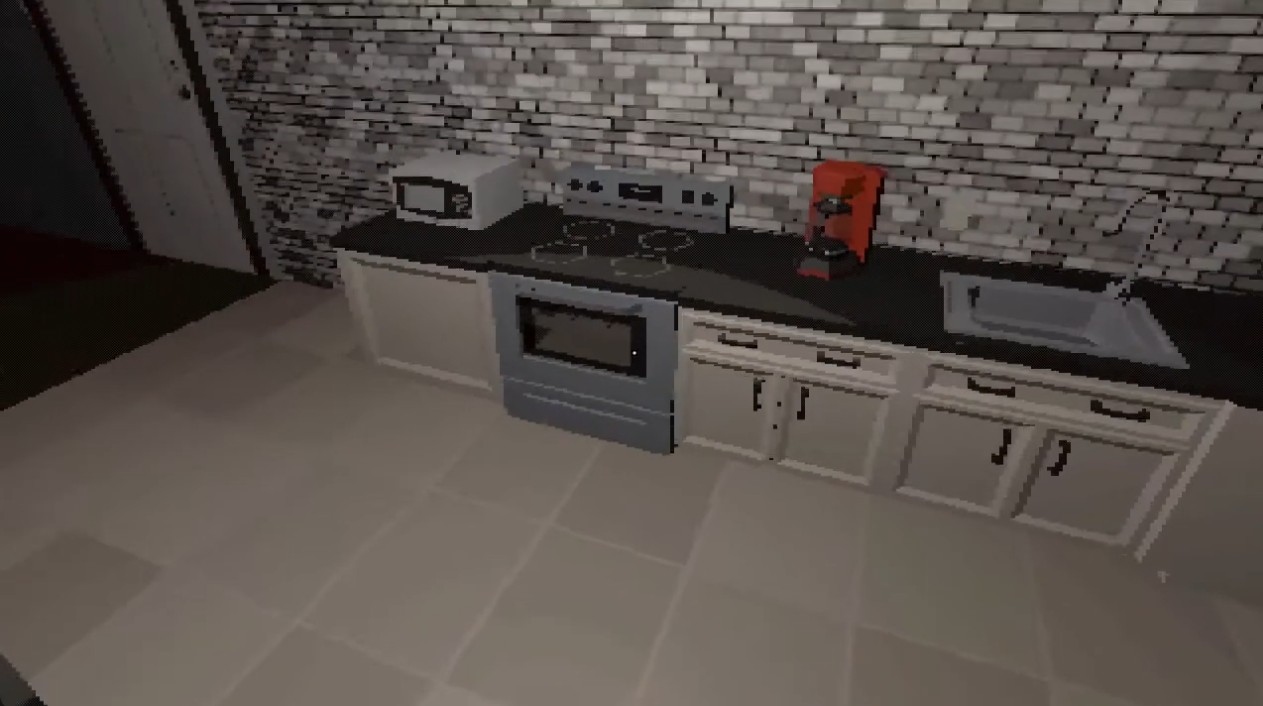
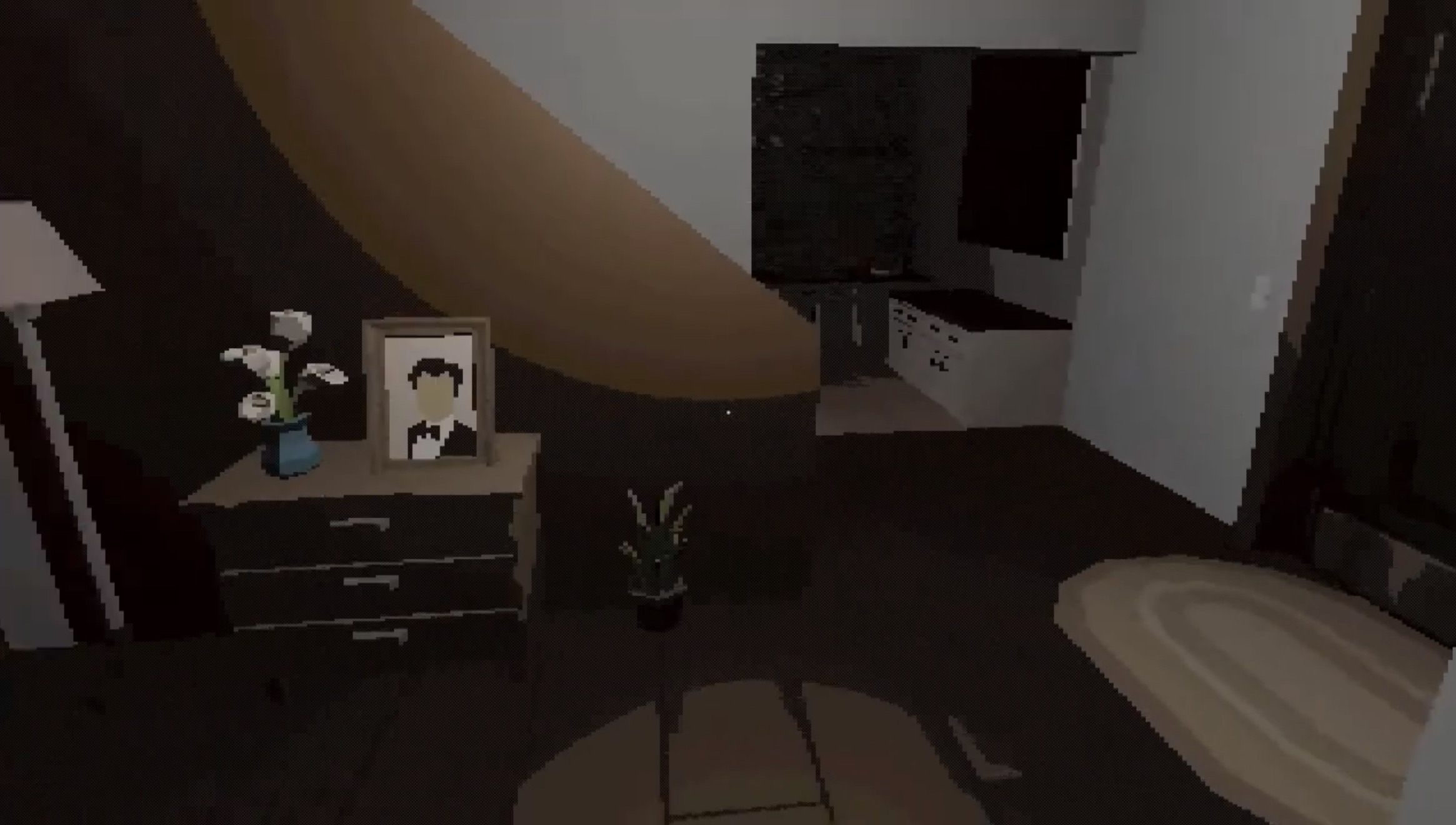
Cat bowl / kitchen shot
Goal interaction.
TIP: Click to view
02 • What it prioritizes

Experience Pillars

These pillars come directly from the structure and goals of the GDD.

Pillar 01

Learnable foreign environments

Non-Euclidean tricks are surprising, but consistent enough to master: loops, scale shifts, mirror logic, and recursive spaces.

Pillar 02

House as story engine

The trials are the action, but the house between nights delivers the mystery: locked rooms open, décor decays, and lore surfaces appear.

Pillar 03

Pressure through routine

The cat bowl turns routine into tension. You can explore… but you’ll be prompted to sleep. Delay too long and the house kills you.

Pillar 04

Immersion without cheap noise

Events can be random or location-triggered: Sounds outside windows, shapes in mirrors, motion in peripheral vision, etc...

03 • The rhythm

Core Loop

The loop is cyclical on purpose: it teaches the player how to survive by learning and repeating patterns, while the house escalates each return.

01 • Explore
Search the house

Find the cat bowl, locate cat food, uncover notes/lore, and notice what has changed since last night.

02 • Sleep
Choose to start the trial

Going to bed triggers the night’s trial. Waiting too long causes the house to “punish” you.

03 • Survive
Adapt to the trial

Each trial introduces a different non-Euclidean feature plus a threat that can kill you.

04 • Return
Refill bowl or die

You return at the same time — one day later. Refill the bowl or the cat eats you in your sleep.

Design pressure:
Exploration is tempting because the house changes and new rooms unlock — but the longer you stall, the more dangerous it becomes.
04 • What changes (and why it matters)

Between Nights: The House Evolves

After every trial, you return to the guest bedroom at the exact same time, but it’s now the next day. The house deteriorates as if you were gone for years, and one new locked room opens after each night.
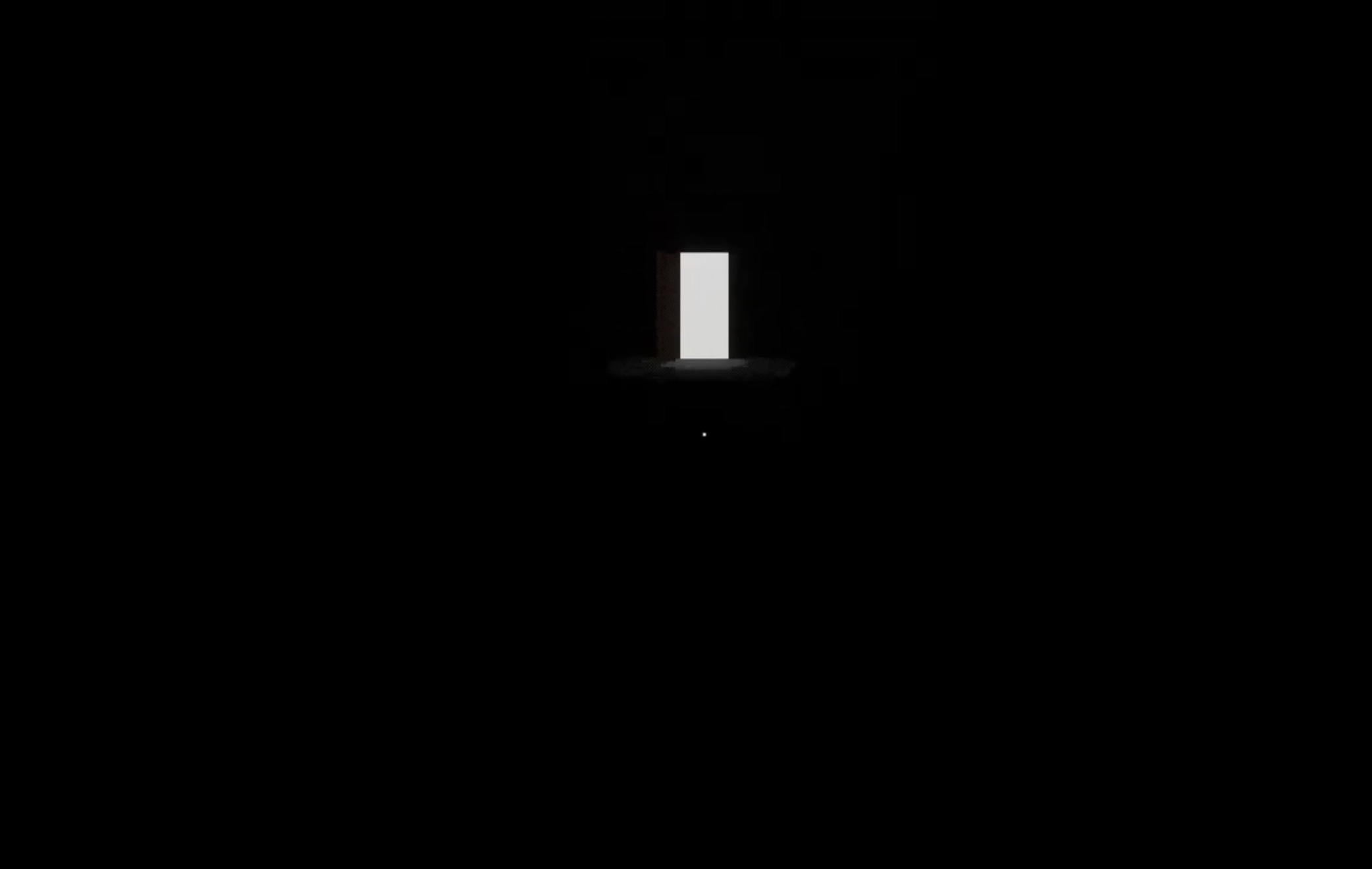
House escalation examples

  • More blood stains, damaged items, and strange sounds.
  • More activity outside windows: Silhouettes, knocks, lock fumbling.
  • New lore surfaces: Notes from past cat sitters, diaries, symbolism.
  • Cat food spawns somewhere new each return; bowl stays in the kitchen.

Room unlocks (1 per night)

  • After Night 1: Star-dome master bedroom + diary in unknown language.
  • After Night 2: Bathroom with mirror showing a mysterious second room.
  • After Night 3: Infinite garage stocked with cat food, distance illusion.
  • After Night 4: Basement key appears (multiple warnings not to enter).
House entry shot
House interior shot.
TIP: Click to view
House entry shot
Exit door/end of game shot.
TIP: Click to view
House entry shot
Door closes behind player upon entry.
TIP: Click to view
05 • Night design

Trials (Nights 1–5)

Each level must: (1) feature non-Euclidean logic, (2) include a threat, (3) be moderately difficult, (4) get harder each night, (5) last 10+ minutes, and (6) end by returning to the house (usually via a door).

Trial feature examples

  • Shapeshifting maze chase
  • Endless corridor of doors + code puzzle
  • Huge room stealth: avoid detection by the cat
  • Reversed dimension: controls + space invert

Night 1 (detailed journey)

  • Wake to scratching → open door → same room, but enormous (scale break).
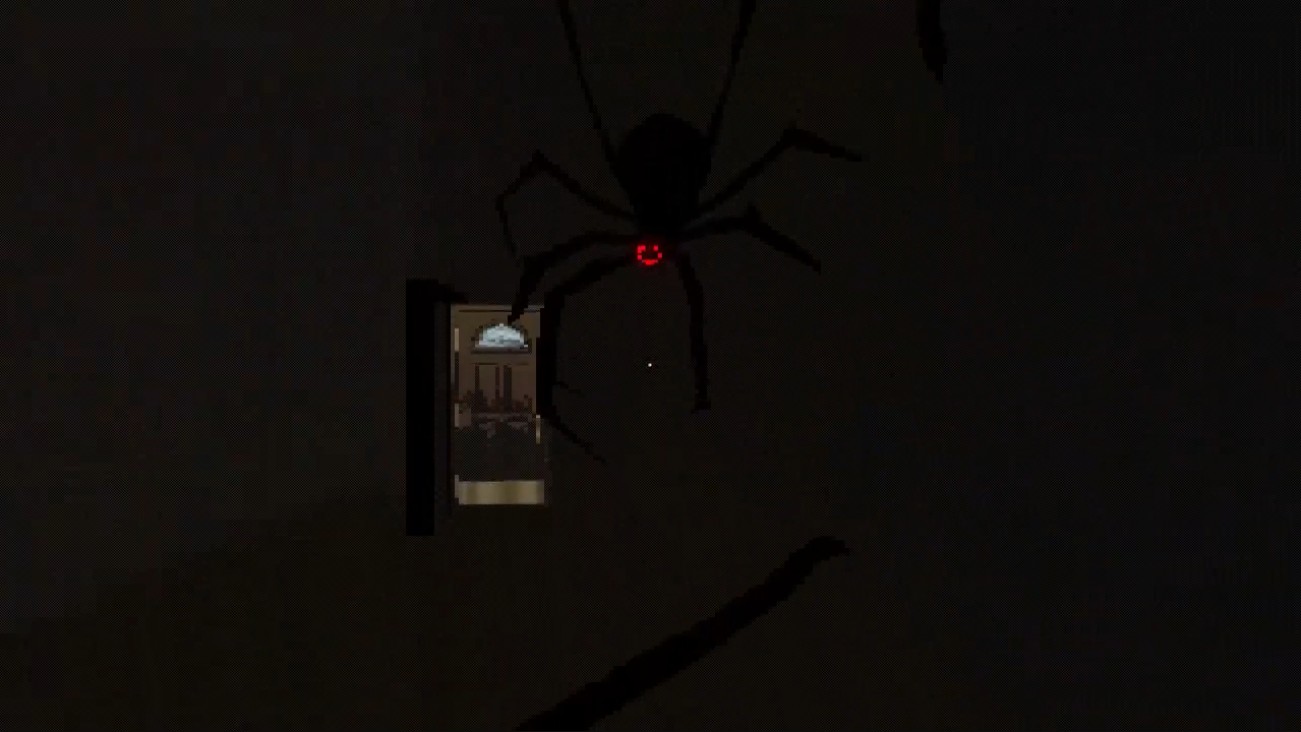
  • Spider drops in → chase begins → escape through tiny door into wall-interior passage.
  • Non-Euclidean maze: wrong turns = death; subtle hints like arrows/exit signs.
  • Final sprint: dodge spiders to the bright door → return to the house.
Why the trials work:
Each night is a new rule for space. Learning becomes survival, and repetition becomes mastery, which supports the cyclical structure.
06 • Narrative structure

Story & Endings

Intro sequence (opening hook)

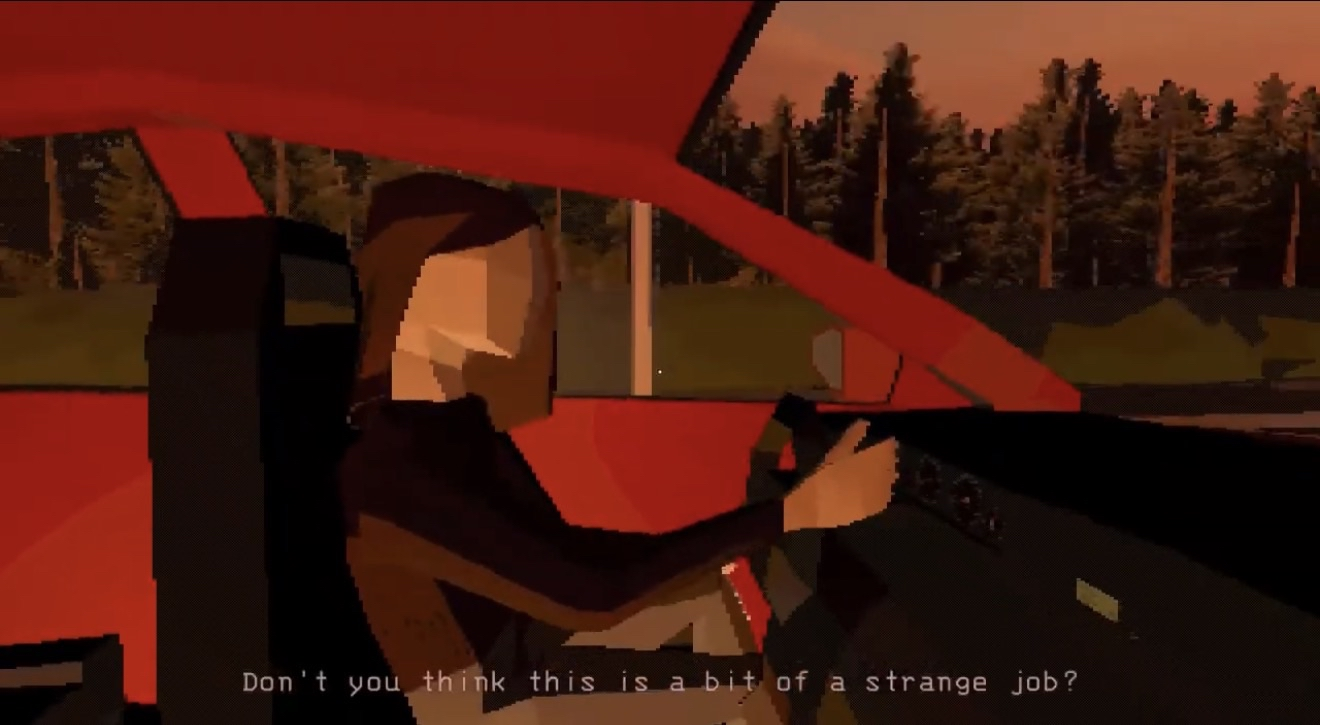
  • Low-res PC job board → absurd cat-sitting pay → “Cthulhu” employer name.
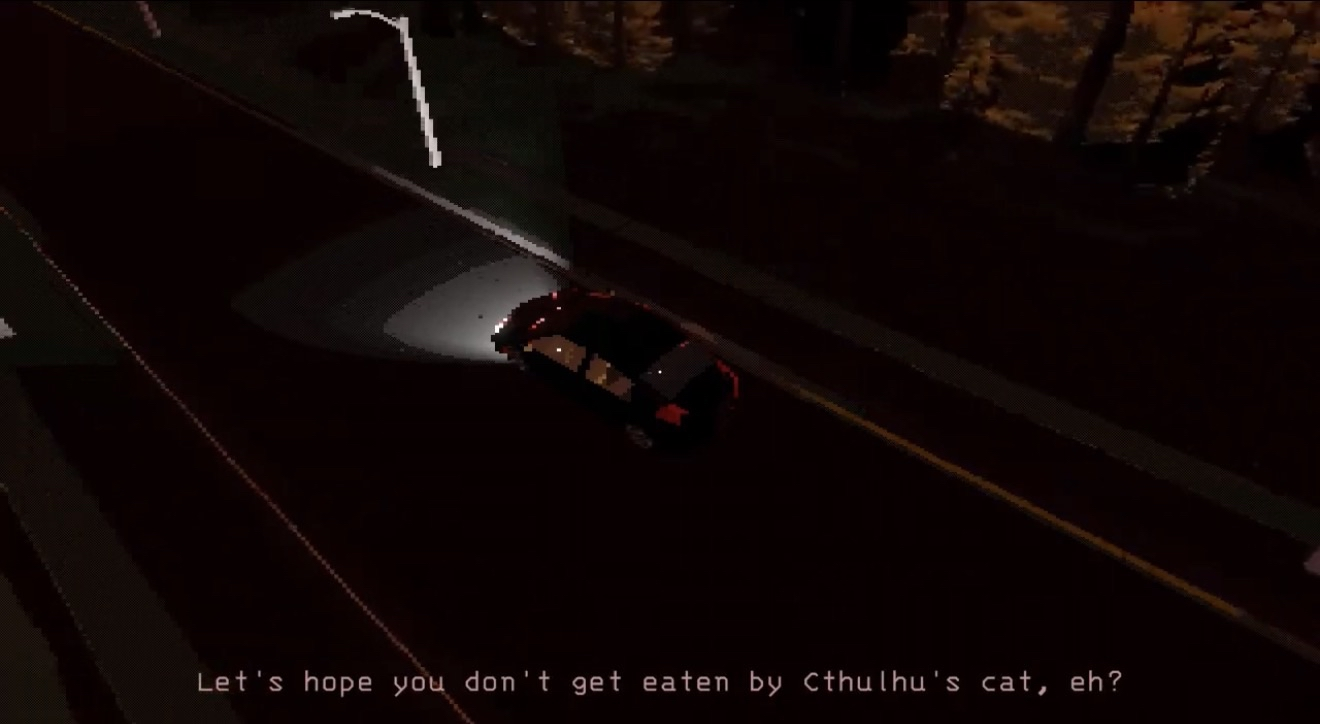
  • Friend drops you off at generic suburban house.
  • You enter, search for the cat, sleep… then wake to scratching.
  • Door opens to an impossible version of the same room → Night 1 begins.

End sequence (after Night 5)

  • Doorbell rings → suited “businessman” Cthulhu returns with a briefcase of money.
  • He thanks you politely for “honoring the contract”.
  • You leave the house and begin walking home through the quiet suburb.
  • The ending branches based on whether you resisted or entered the basement.
Deep Dive

Good Ending

Resist the basement: If you never enter the basement, you make it home. Fade to black → celebration collage. You got paid… and escaped.

Deep Dive

Bad Ending

Break trust: If you enter the basement, an elevator appears on your walk home. You’re taken to a void where Cthulhu reveals his true nature and destroys your mind.

08 • Feel + identity

Art Direction

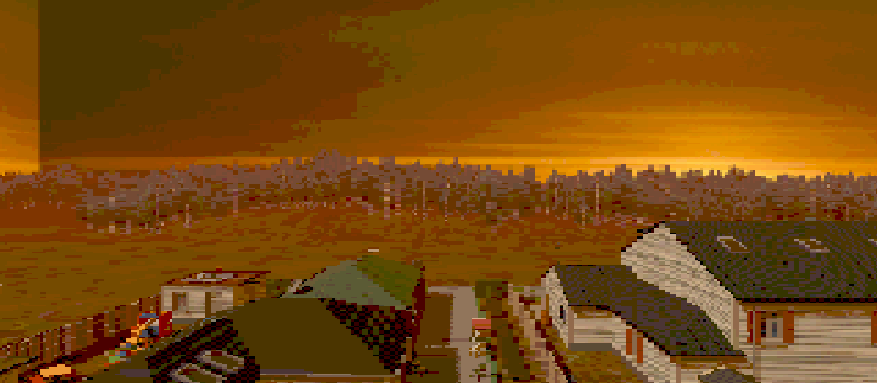
The visual direction intentionally mimics early PlayStation horror titles. A custom PS1-style filter was implemented to introduce texture warping, colour banding, and slight instability that reinforces analogue horror aesthetics.
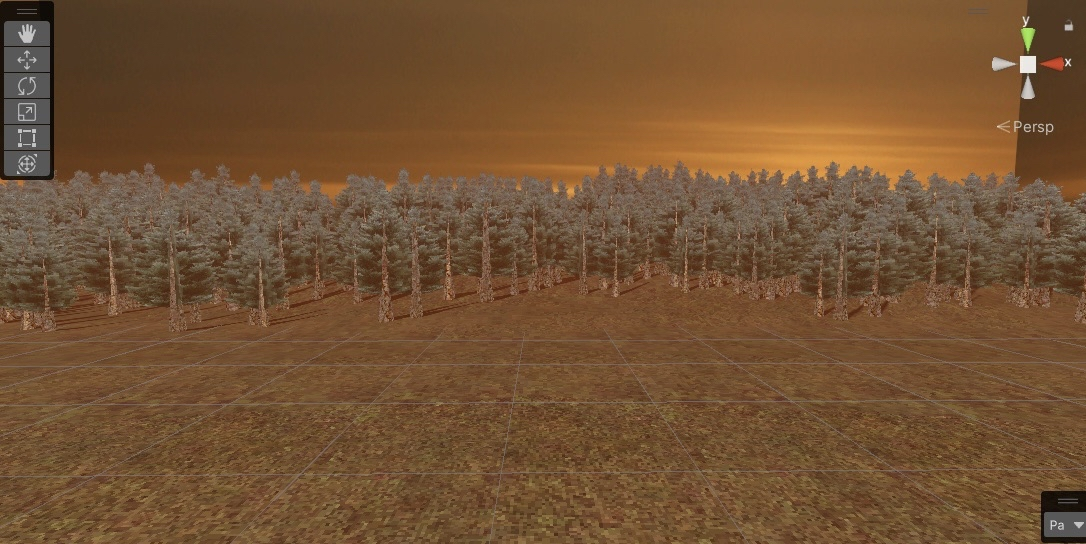
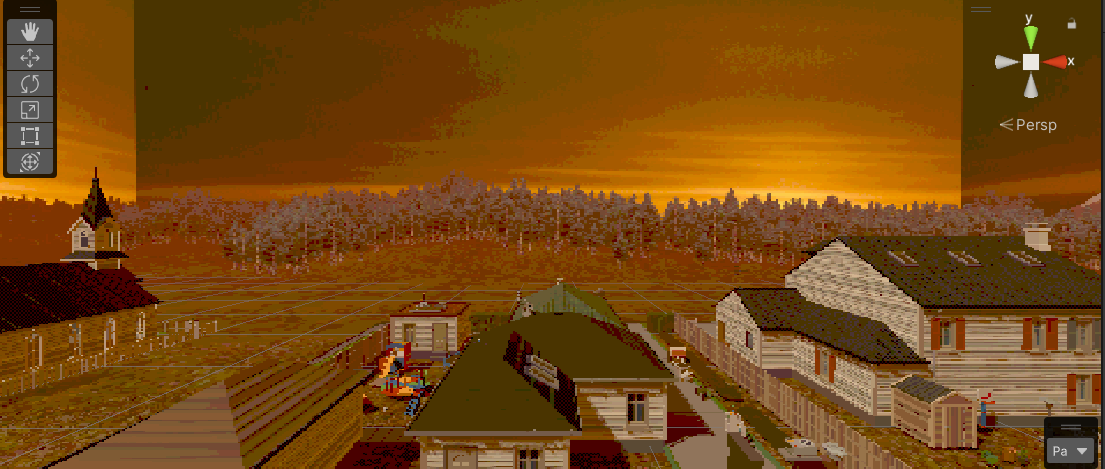
Art philosophy

  • PS1-style 3D: Low‑poly models + low‑resolution textures.
  • Setting: American suburban colonial house that slowly reveals impossible spaces.
  • Player representation: Simple model; randomized textures imply many previous sitters.
  • Cthulhu: Appears human-scale in a suit before revealing an abstract cosmic form.
  • The cat: “Tinkle the Furrbidden One”, oversized with a split mandible and abnormal teeth.
House entry shot
Scene before PS1 filter.
TIP: Click to view
House entry shot
Scene after PS1 filter.
TIP: Click to view
House entry shot
Scene with further pixel on PS1 filter.
TIP: Click to view
11 • Looking forward

Results & Takeaways

What I want to land (playtest goals)

  • The house feels coherent enough to learn, but hostile enough to dread.
  • Players understand the “feed the cat” rule as a constant looming threat.
  • Non-Euclidean moments feel surprising but fair (rule discovery → mastery).

What I’d push further next

  • Find a way to implement VR as originally planned.
  • More “return home” micro-events to build paranoia (windows, sounds, silhouettes).
  • Stronger visual language for each trial’s unique rule so players can reason faster.

Cthulhu’s Cat Sitter is about surviving a contract you can’t quit — and learning the rules of a place that shouldn’t have rules at all.